AI-Powered Asset Monitoring for Conveyor, Wheel, Roller and Cleat Inspection
In industrial environments, assets such as conveyor belts, rollers, wheels, cleats, and material handling systems are essential for uninterrupted production. A minor fault such as belt misalignment, wheel non-rotation, cleat damage, or material blockage can quickly lead to downtime, equipment stress, and operational inefficiency.
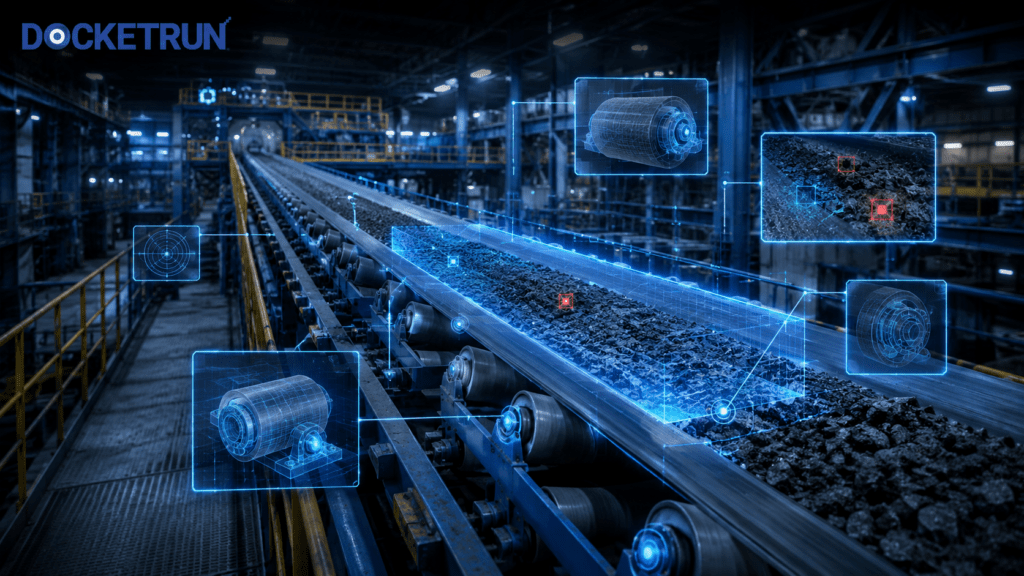
DocketRun’s AI-Powered Asset Monitoring System enables industries to monitor these critical assets in real time using computer vision, edge AI, and intelligent alerts. The solution transforms camera feeds into actionable insights so plant teams can identify problems early and take preventive action before failures become critical.
Why Industrial Asset Monitoring is Important
Industrial assets operate continuously in demanding environments where dust, heat, vibration, and load variations are common. Traditional inspection methods usually depend on manual observation or scheduled maintenance checks, which may not detect an issue at the right time.
A conveyor may begin sagging gradually. A roller may stop rotating. A cleat may crack or shift. Material may accumulate at a transfer point. When these issues remain unnoticed, they can lead to equipment breakdown, production delays, spillage, and safety risks.
What is AI-Powered Asset Monitoring?
AI-powered asset monitoring is a vision-based inspection approach that uses industrial cameras and computer vision models to monitor the condition and movement of physical assets. The system analyses live video feeds and detects deviations from normal asset behavior.
Instead of relying only on manual inspections, plant teams receive alerts when the system detects issues such as wheel non-rotation, conveyor belt misalignment, cleat damage, material blockage, overflow, or abnormal flow conditions.
Key Use Cases of DocketRun Asset Monitoring
1. AI-Based Wheel and Roller Inspection
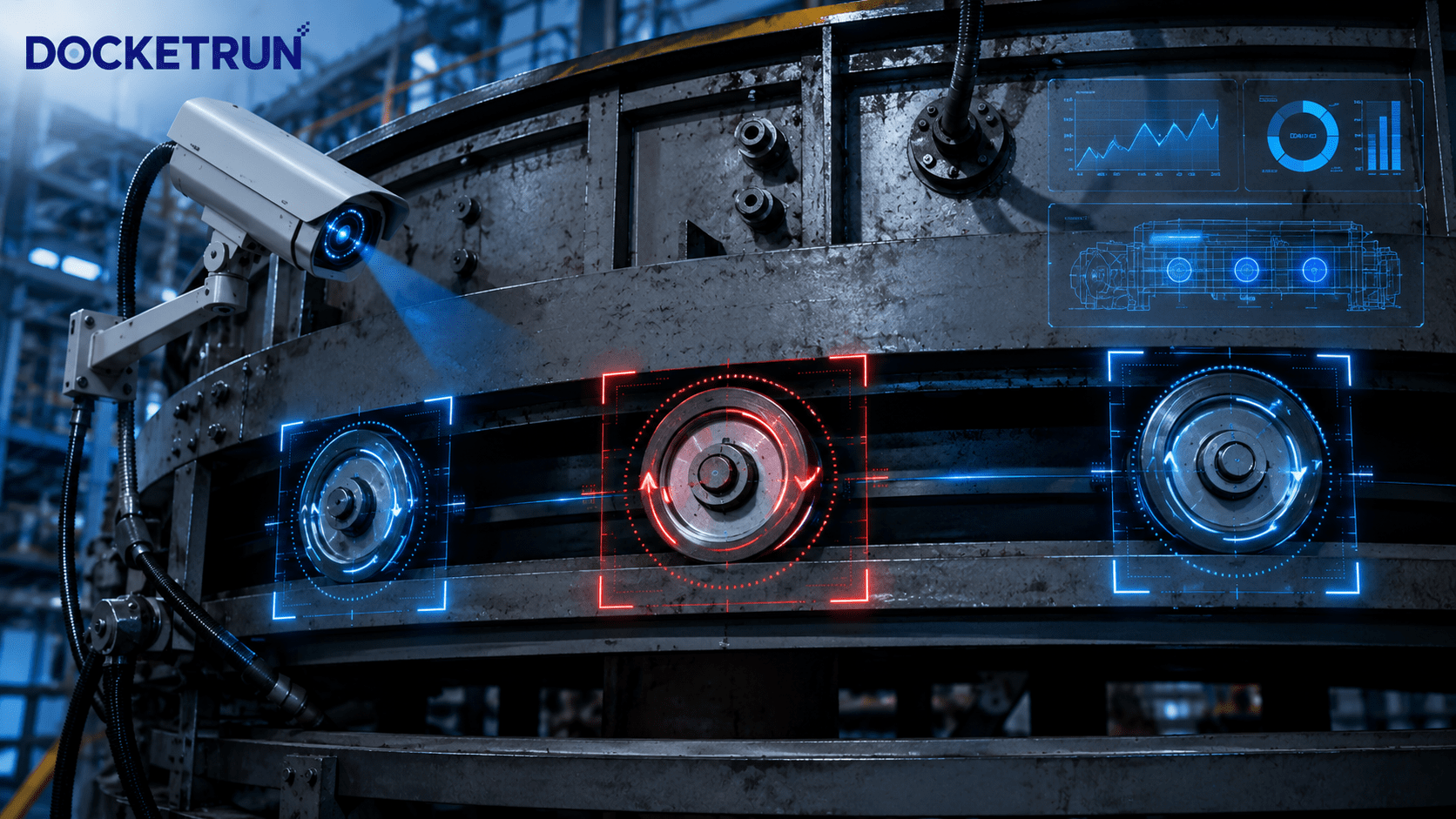
Wheels and rollers are essential for smooth movement across conveyor systems. If a wheel is stuck, slipping, damaged, or rotating abnormally, it can increase mechanical stress and affect the entire line.
- Wheel non-rotation detection
- Wheel slippage detection
- Irregular movement analysis
- Missing or damaged wheel identification
- Visible abnormal roller behavior monitoring
2. Conveyor Belt Monitoring System
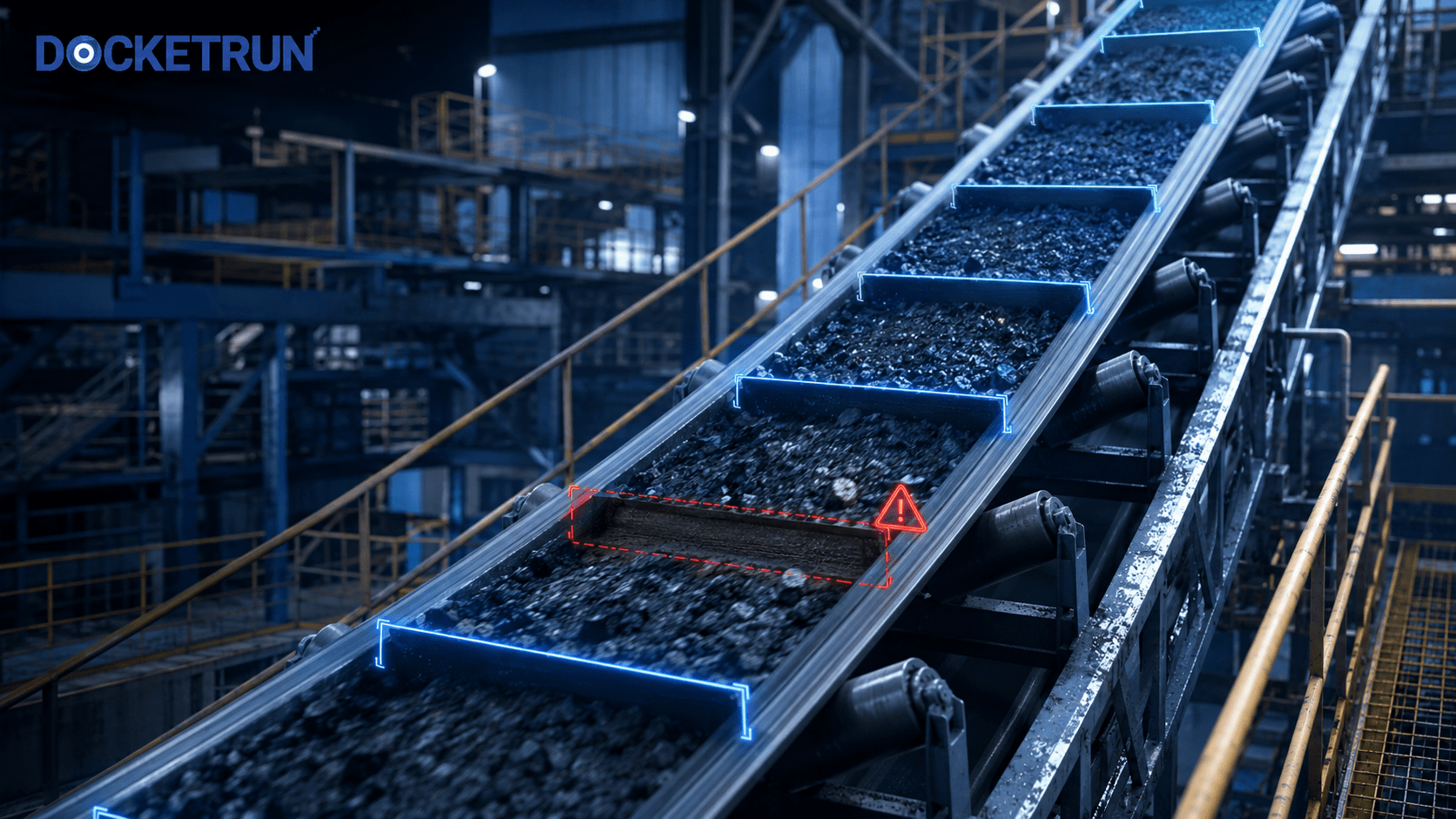
Conveyor belts are widely used in steel plants, cement plants, mining operations, power plants, ports, and material handling environments. Even a minor conveyor issue can impact throughput and reliability.
- Conveyor belt sagging detection
- Belt misalignment detection
- Material blockage detection
- Uneven loading identification
- Spillage-prone zone visibility
- Abnormal material flow monitoring
3. Cleat Monitoring and Inspection
Cleats are important in inclined conveyor systems and specialized transfer lines where controlled material movement is required. Damaged or missing cleats can result in rollback, spillage, and inefficient transfer.
- Broken cleat detection
- Missing cleat identification
- Cleat misalignment monitoring
- Material slipping between cleats
- Deformation and irregular spacing analysis
4. Material Flow and Blockage Detection
Smooth material flow is a key indicator of process health. When material starts accumulating, overflowing, or moving unevenly, it often points to a belt issue, loading issue, or downstream process bottleneck.
DocketRun’s AI system continuously monitors material movement and provides real-time visibility into abnormal flow conditions.
How DocketRun’s Asset Monitoring System Works
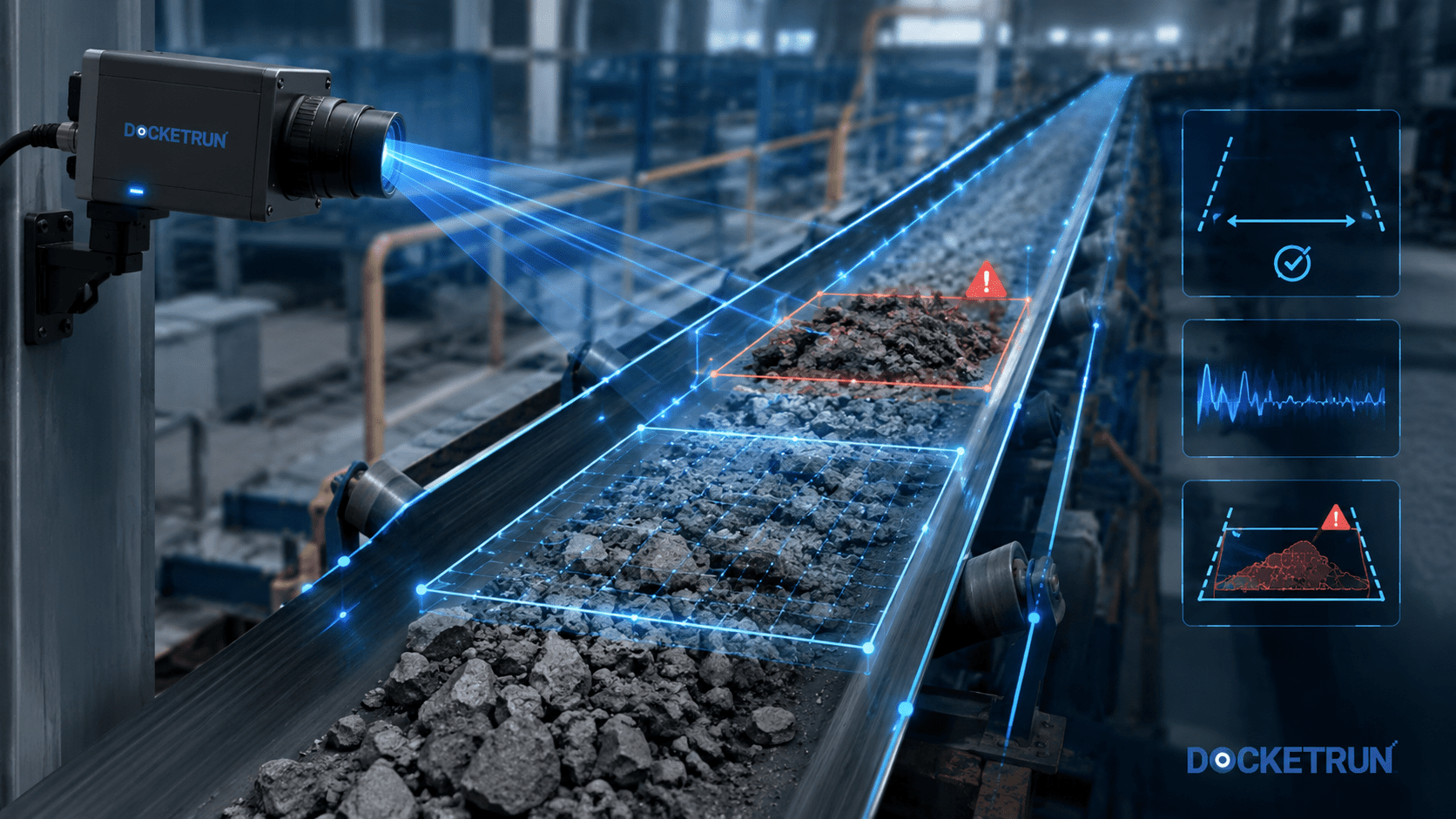
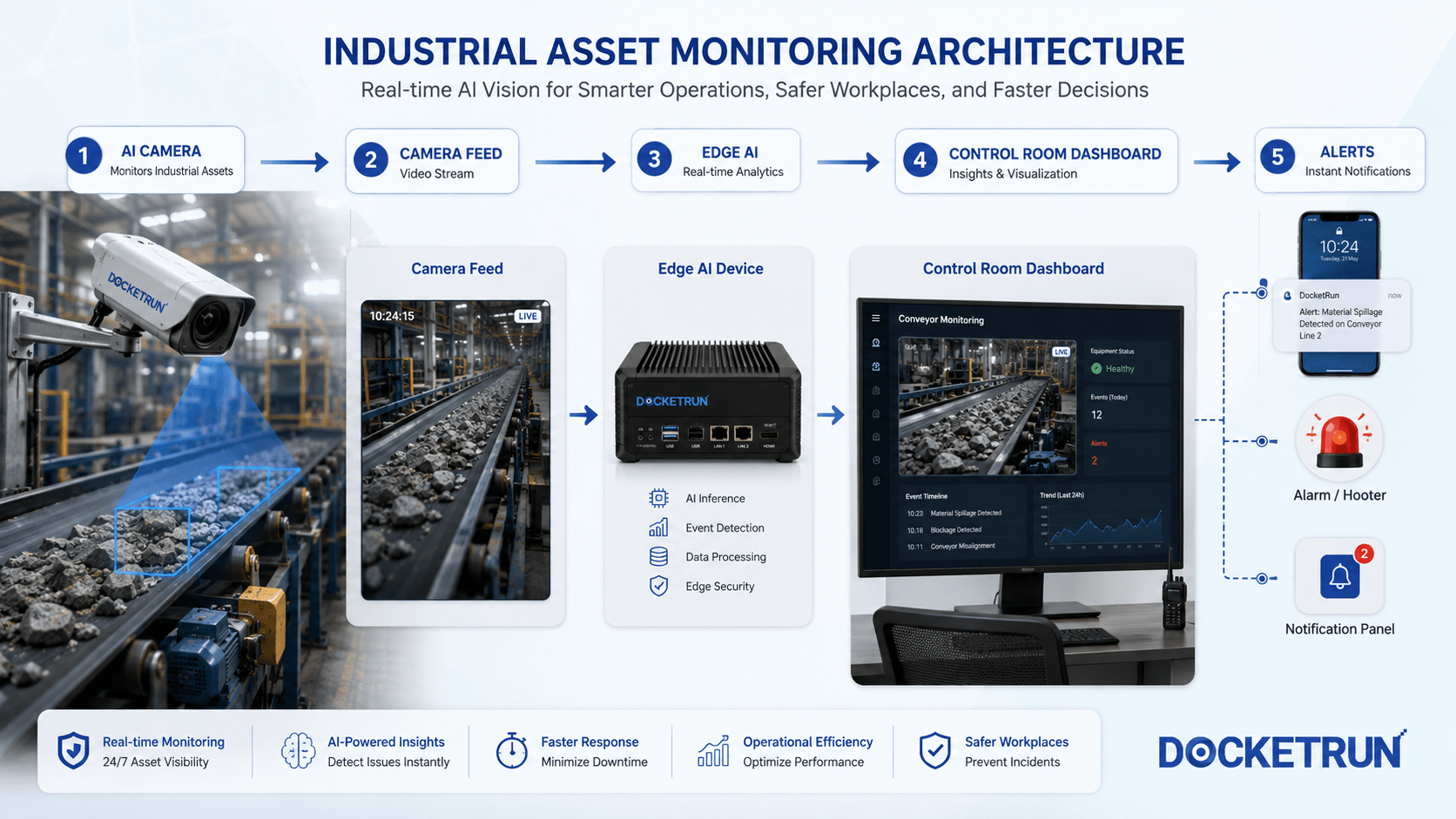
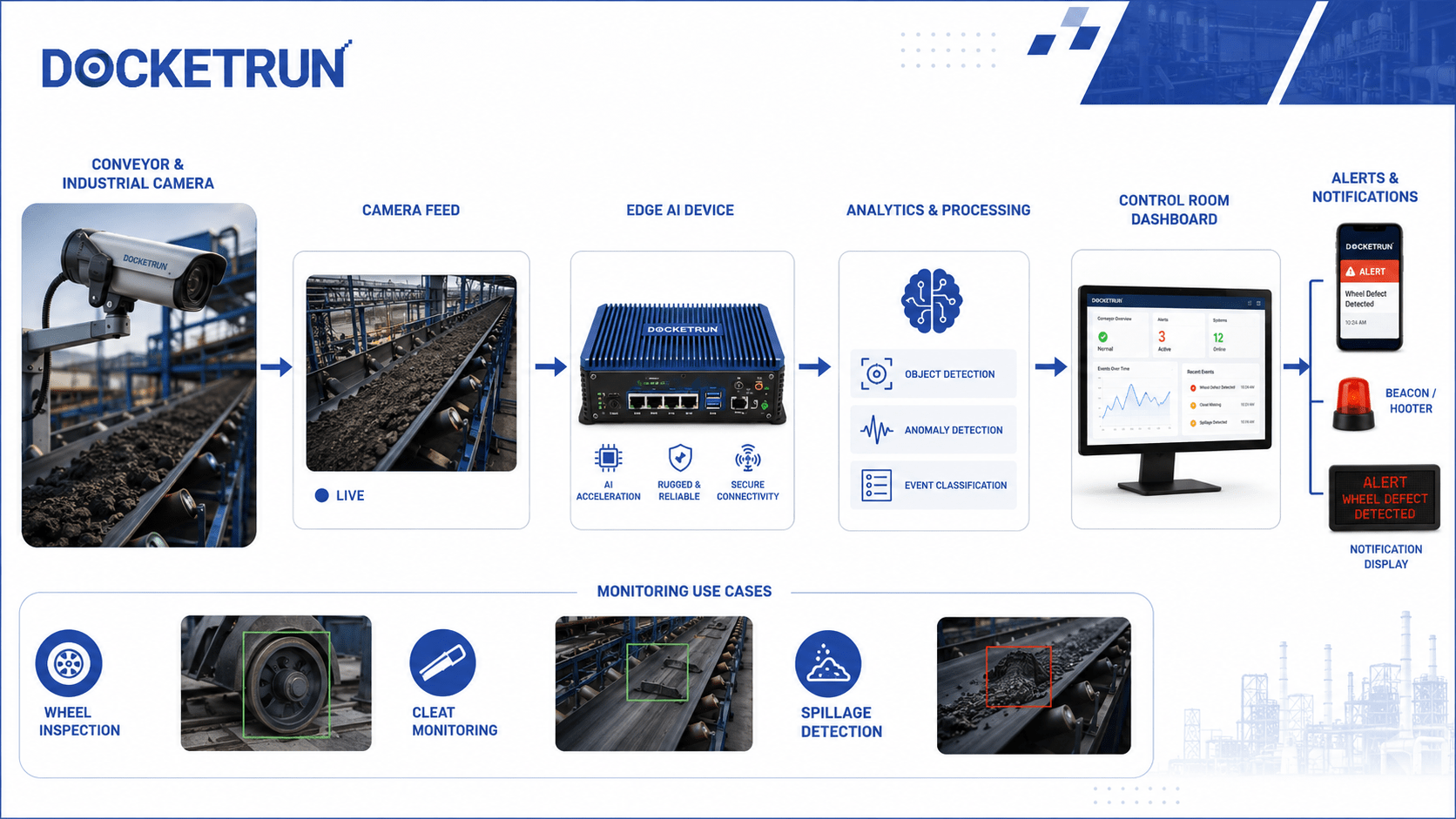
DocketRun’s system can work with existing CCTV or industrial camera infrastructure, depending on the required field of view, resolution, and visibility of the monitored asset. Video feeds are processed on an edge AI device or analytics server.
Step 1: Camera Input
Industrial cameras capture live video of conveyors, rollers, wheels, cleats, and material flow zones.
Step 2: AI Video Analytics
Computer vision models analyse movement, alignment, structure, and asset behavior in real time.
Step 3: Anomaly Detection
The system detects belt sagging, wheel non-rotation, blockages, cleat damage, and other anomalies.
Step 4: Alerts and Dashboard
Operators receive actionable alerts through dashboards, control room displays, and integrated notifications.
Benefits of AI-Powered Asset Monitoring
Reduced Downtime
Early detection of abnormal asset behaviour helps prevent unexpected stoppages and production interruptions.
Improved Maintenance Planning
Maintenance teams can move from reactive maintenance to proactive and predictive maintenance.
Better Asset Life
Continuous monitoring reduces prolonged mechanical stress and helps improve overall asset life.
Enhanced Safety
Detecting spillage, misalignment, blockage, and asset irregularities helps reduce unsafe operating conditions.
Industries Where AI Asset Monitoring Can Be Used
DocketRun’s AI-powered asset monitoring solution is suitable for industries where conveyors and rotating assets are critical to operations.
- Steel plants
- Cement plants
- Mining operations
- Power plants
- Ports and bulk logistics
- Manufacturing facilities
- Warehouses and processing units
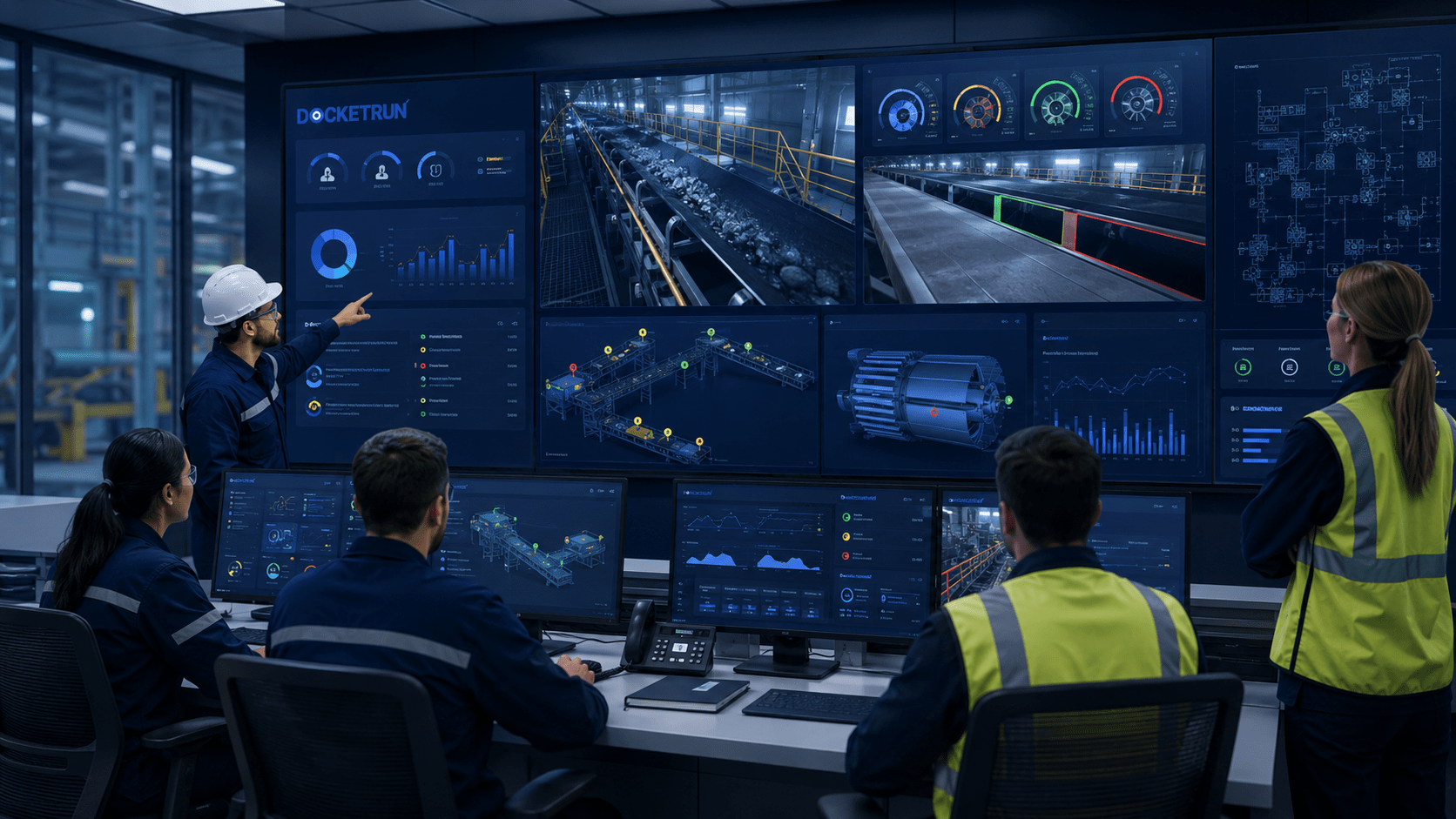
From Manual Inspection to Intelligent Asset Monitoring
Asset failures are rarely sudden. They often begin as small visual indicators — a slightly misaligned belt, a stuck roller, a damaged cleat, or an abnormal material pattern. With continuous video-based intelligence, these issues can be detected early and addressed before they affect production.
By combining CCTV, computer vision, AI analytics, edge processing, alerts, and dashboards, DocketRun helps industries move from manual inspection to intelligent and proactive asset monitoring.
Learn more about DocketRun’s industrial AI solutions through our Video Management System and industrial AI monitoring solutions.
Frequently Asked Questions About AI Asset Monitoring
What is AI-powered asset monitoring?
AI-powered asset monitoring uses cameras and computer vision models to continuously inspect industrial assets such as conveyors, wheels, rollers, cleats, and material flow systems. It detects abnormal conditions and generates real-time alerts.
Can the system work with existing CCTV cameras?
Yes. In many deployments, the solution can work with existing CCTV or industrial camera infrastructure, depending on camera positioning, resolution, and visibility of the monitored asset.
What issues can be detected in conveyor systems?
The system can detect belt sagging, belt misalignment, blockage, uneven loading, spillage-prone conditions, abnormal material flow, and related conveyor anomalies.
How does AI wheel inspection work?
The AI system analyses video feeds to observe wheel and roller movement and identifies non-rotation, slippage, irregular movement, or visible damage.
Why is cleat monitoring important?
Cleats help control material movement, especially on inclined conveyors. Damaged or missing cleats can lead to rollback, spillage, and inefficient transfer. AI monitoring helps detect these issues early.
Can the system support predictive maintenance?
Yes. By continuously capturing anomaly patterns and asset condition events, the system supports proactive and predictive maintenance planning.
Which industries can use this solution?
This solution is suitable for steel plants, cement plants, mining operations, power plants, ports, warehouses, logistics facilities, and manufacturing environments.
Looking to Digitize Industrial Asset Inspection?
DocketRun helps industries turn existing video infrastructure into an intelligent asset monitoring layer for improved reliability, visibility, and faster response.
Get in Touch